Public Policy

Sharing another Ballotpedia Q&A! 🗳️

Q: What areas of public policy are you personally passionate about?

A: I’m passionate about public policies that strengthen communities and improve quality of life while keeping Duvall’s small-town character. I focus on thoughtful growth, safe infrastructure, sustainable budgets, and public safety, ensuring first responders have the resources they need.

Transparency and community engagement are central, so residents have meaningful input. Across all policies, I pay attention to how decisions affect developers and homeowners differently, seeking fair and balanced outcomes.

I’m also committed to environmental stewardship and regional collaboration on transportation, housing, flood control, and open-space preservation, using evidence-based solutions to plan responsibly for Duvall’s future.

You can read my full Q&A here: https://ballotpedia.org/Amy_McHenry_(Mayor_of_Duvall,_Washington,_candidate_2025)

Community Vision

I recently had the opportunity to respond to a question from the Duvall Chamber of Commerce Mayoral Candidate Forum, though it was cancelled, I wanted to share my answer here.

Q: Why should Duvall’s small business owners and residents trust you to lead the city through its next chapter — and how will your approach ensure that Duvall remains both economically vibrant and deeply connected as a community?

My answer: Trust is earned, not given, and for me, trust starts with three things: listening, consistency, and results.

Over the past eight years on City Council, I’ve worked hard to build that trust by showing up, being transparent, and following through on what I say I’ll do. Whether it’s at a council meeting, a neighborhood event, or just talking with someone at the coffee shop downtown, I make a point to listen — really listen — to what people are experiencing and what they need from their local government.

What sets me apart is that I don’t approach this work from a distance. I live the same realities as everyone else in Duvall. I’m a parent navigating school drop-offs and morning traffic on Main Street. I’m a small business owner who understands how much time, heart, and personal investment it takes to make a local business thrive. And I’m a neighbor who cares deeply about the kind of community we’re building together, one that stays welcoming, connected, and true to its small-town roots even as we grow.

As mayor, my approach will be about steady, practical leadership. That means keeping our city financially stable, managing growth responsibly, and making decisions based on what’s best for the long-term health of Duvall, not just the short-term headlines.

Economically, that begins with supporting our small businesses, which are the backbone of our local economy and the heartbeat of our downtown. I want to make it easier to do business in Duvall by simplifying permits, modernizing how people access information and city services, and creating clearer communication between business owners and City Hall. I also plan to bring our business community, the Chamber, and City staff together regularly through a Small Business Roundtable, so we’re not just reacting to challenges, but working side by side to find solutions.

At the same time, we need to look ahead by making smart investments in infrastructure, safe transportation options, and reliable services that keep Duvall moving. When we plan well, we don’t just solve today’s problems — we set ourselves up for success for the next generation. But a vibrant city isn’t built only on economics; it’s built on connection. That’s something I care deeply about. I want residents to feel empowered and involved in shaping the city’s direction. One of my goals is to launch Civic 101 workshops, informal classes where residents can learn how city government really works, how to advocate effectively, and how to get involved in local decision-making. Because good government doesn’t happen to people, it happens with people.

Ultimately, I want Duvall to remain not just a place where people live, but a community where people belong. That takes leadership that’s accessible, responsive, and grounded in the values that make this city special — kindness, accountability, and collaboration.

So when I talk about leading Duvall through its next chapter, what I really mean is continuing the work of bringing people together, listening first, being transparent about challenges, and leading with heart. Because that’s how we’ll keep Duvall both economically strong and deeply connected as a community.
Thank you, Duvall!

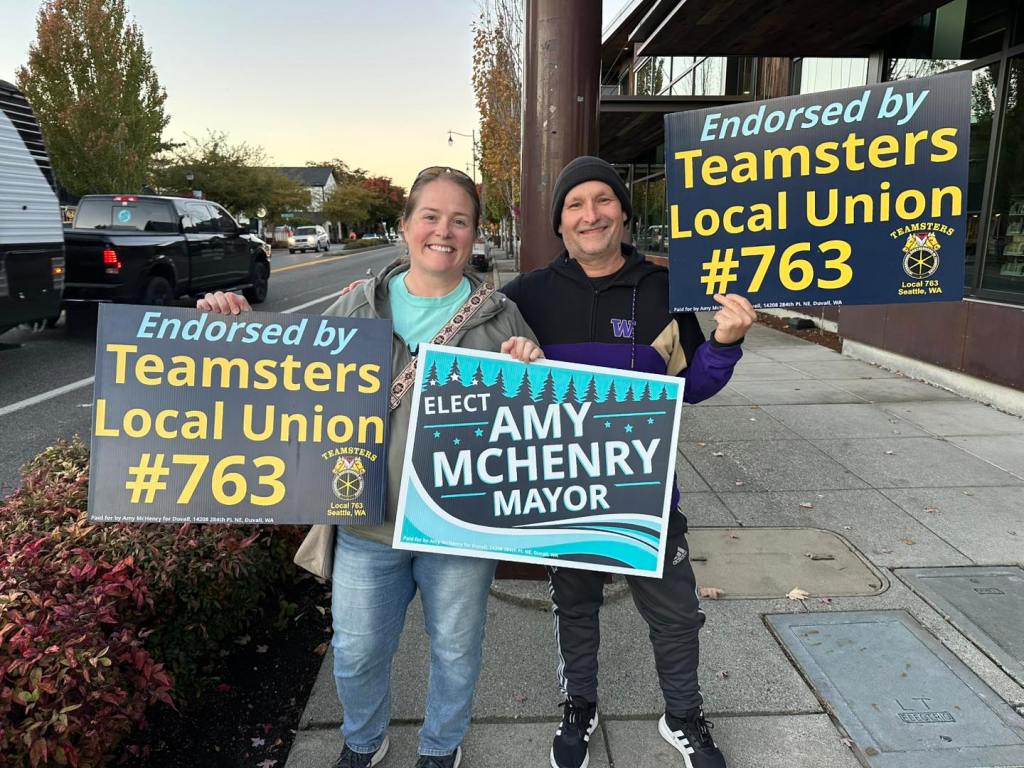
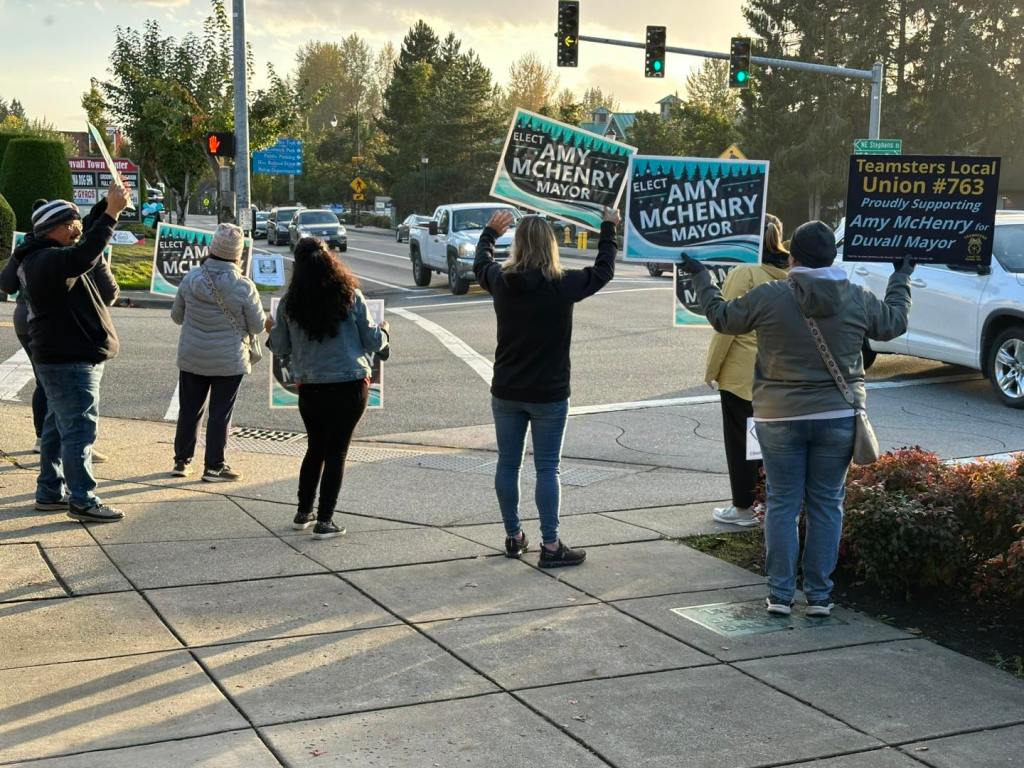
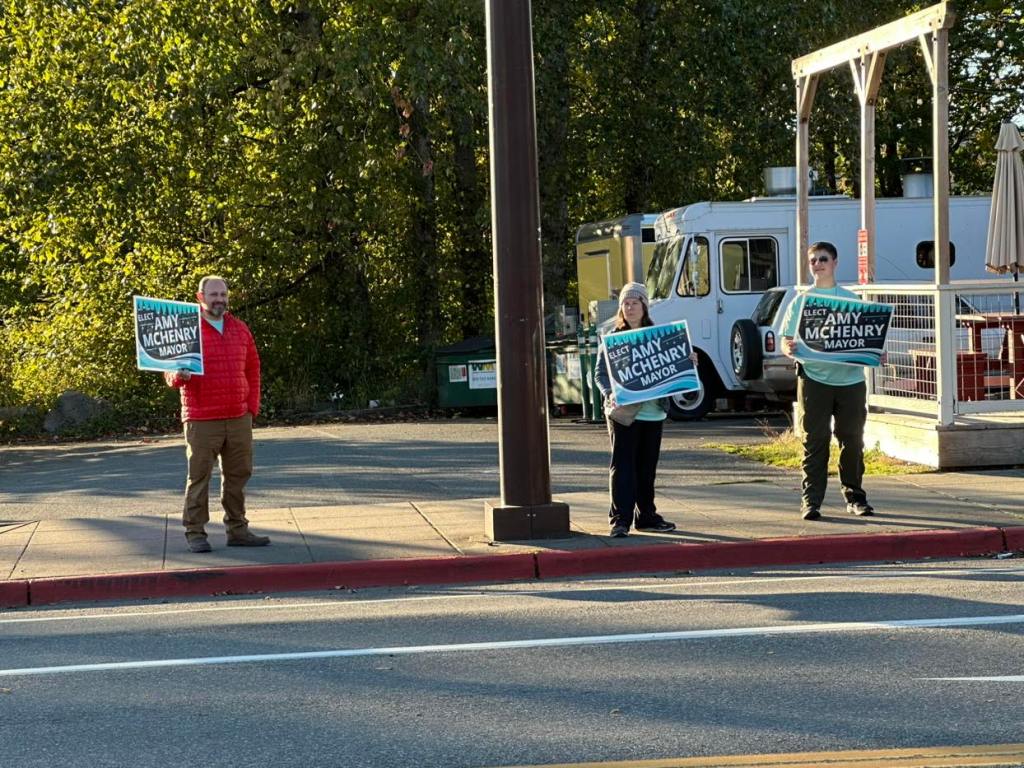
Thank you to everyone who came out to wave signs this week!

Every honk, wave, and smile reminds me how special this community is — and how many people care deeply about Duvall’s future. Seeing so many friendly faces out there means the world to me.

Campaigns are built on teamwork, and I’m so grateful for every single person who’s taken time out of their day to stand on a corner, wave a sign, and share a little positivity with passing neighbors.

You make this campaign what it is — community-driven, hopeful, and full of heart. The messages I’m receiving just tonight of neighbors letting me know they have already voted for me is incredibly humbling. Thank you for showing up for Duvall! 💙

A few things

As ballots arrive, I’ve noticed heightened online discussion and some understandable questions about the city’s budget.

Maintaining fiscal responsibility is essential — I agree we should never shift new costs onto residents without careful scrutiny. But claiming a blanket “$2 million deficit” without context is misleading.

First, municipal budgets are made up of multiple funds; a shortfall in one doesn’t automatically mean a crisis across the board. Second, Duvall maintains healthy reserves and mitigation funds precisely to absorb swings. Third, promising “no tax increases, no burden to residents” may sound reassuring, but real balance often requires tough choices: trimming non-essential programs, renegotiating contracts, prioritizing capital projects, or phasing adjustments over time.

As a voter, I’d want to hear how a candidate plans to make those trade-offs — which cuts they’d propose, or how they’d involve the community in that discussion.

As mayor, I’ll continue to insist on transparency: show which line items are unsustainable, present real alternatives, and walk residents through the trade-offs. I won’t rely on slogans or vague assurances. If there’s a structural gap, we’ll address it steadily and openly — not ignore it. Because trust is built by showing your work, not by promising the moon. Our full budget is online and available to the public here: https://stories.opengov.com/…/published/6MBzSG4wW… I’ll be looking to make this information even more accessible and understandable for residents moving forward.

The City Council recently approved a 0.1% sales tax dedicated to public safety. You can read more here: https://www.duvallwa.gov/…/AB-25-46—Ordinance-1340-on…

As our levy that funds the School Resource Officer at Cedarcrest High School expires in December, it was essential to identify a sustainable funding option for that position and for our police department overall — both of which remain high priorities for our community. Unlike levies, which expire after a set term, this sales tax provides a stable, long-term funding source that ensures continuity in public safety services without repeated renewal campaigns.

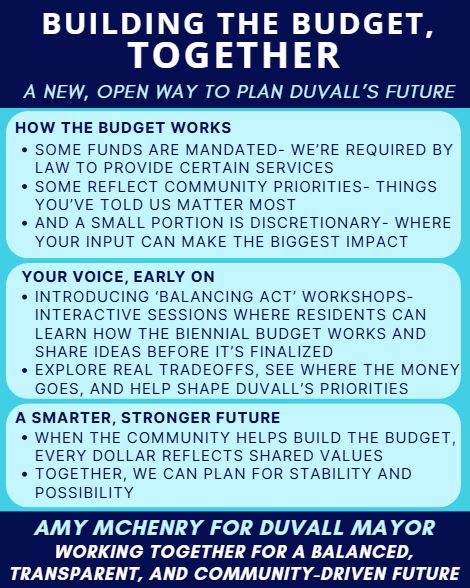
A Better Way to Build Duvall’s Budget—Together

Over the past week, I’ve shared how Duvall’s budget actually works—how our funds are structured, why reserves matter, and how we plan for stability and transparency. Now I want to talk about what comes next—and how I’d like to do things differently as Mayor.

Creating a city budget isn’t just about numbers. It’s about values, priorities, and trust. Some parts of the budget are non-negotiable—things we’re legally required to fund. Others are the community’s clear priorities—like safety, infrastructure, and parks. And then there’s a small portion that’s discretionary, where we have room to make meaningful choices.

That’s where you come in.

I want Duvall residents to have more than a seat in the audience—I want you to have a seat at the table. That’s why I plan to introduce “Balancing Act” workshops, where the community can walk through the real tradeoffs that go into building our biennial budget. These sessions will make the process interactive, educational, and collaborative—so everyone can see how decisions are made and share input before the budget is finalized.

A transparent budget process shouldn’t just inform people—it should invite participation. Together, we can make sure every dollar reflects the priorities of the people who live here.