3 Key Messages

I recently completed Ballotpedia’s candidate questionnaire — it’s a great opportunity to share more about why I’m running for Mayor and what guides my leadership.

But I’ll be sharing a few highlights here over the next week, starting with this question:

Q: Please list below 3 key messages of your campaign. What are the main points you want voters to remember about your goals for your time in office?

My Answer:

Steady, Experienced Leadership

• With eight years on the Duvall City Council and three as Mayor Pro Tem, Amy McHenry brings deep, hands-on experience in city operations, budgeting, and policy development. She has served on committees for finance, public works, and public safety, and represented Duvall regionally on boards addressing transportation, housing, and environmental planning. Her leadership is defined by collaboration, preparation, and accountability—ensuring decisions are well-informed and community-centered. Amy’s steady, consistent approach provides continuity and trusted guidance as Duvall navigates growth, infrastructure needs, and fiscal challenges.

Balanced Growth and Infrastructure

• Amy is committed to managing growth responsibly while preserving the small-town character that makes Duvall unique. She supports long-range planning that connects new development to infrastructure capacity, public safety, and environmental protection. Her priorities include maintaining roads and utilities, improving transportation safety for drivers, cyclists, and pedestrians, and expanding walking and biking connections throughout the city. Amy also emphasizes fiscal discipline—ensuring infrastructure investments align with community needs and budget realities. Her goal is a balanced, sustainable path forward that supports families, local businesses, and Duvall’s rural surroundings alike.

Transparency and Community Connection

• Transparency and accessibility are central to Amy’s public service. She believes residents deserve to understand how decisions are made and to have genuine opportunities to share input. To strengthen communication, Amy created “Council Chats” and community surveys, inviting direct dialogue and feedback on city priorities. She values diverse viewpoints and believes collaboration builds stronger, more lasting outcomes. Whether working with residents, city staff, or regional partners, Amy strives for an open, respectful approach that keeps the community at the heart of every decision. Her leadership reflects integrity, inclusivity, and a deep commitment to public trust.

More to come soon—but if you’d like to dive into my full Ballotpedia profile, you can read it here anytime: https://ballotpedia.org/Amy_McHenry_(Mayor_of_Duvall…

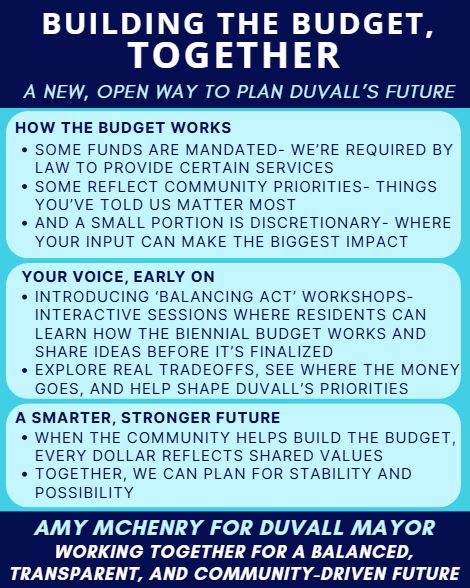
A Better Way to Build Duvall’s Budget—Together

Over the past week, I’ve shared how Duvall’s budget actually works—how our funds are structured, why reserves matter, and how we plan for stability and transparency. Now I want to talk about what comes next—and how I’d like to do things differently as Mayor.

Creating a city budget isn’t just about numbers. It’s about values, priorities, and trust. Some parts of the budget are non-negotiable—things we’re legally required to fund. Others are the community’s clear priorities—like safety, infrastructure, and parks. And then there’s a small portion that’s discretionary, where we have room to make meaningful choices.

That’s where you come in.

I want Duvall residents to have more than a seat in the audience—I want you to have a seat at the table. That’s why I plan to introduce “Balancing Act” workshops, where the community can walk through the real tradeoffs that go into building our biennial budget. These sessions will make the process interactive, educational, and collaborative—so everyone can see how decisions are made and share input before the budget is finalized.

A transparent budget process shouldn’t just inform people—it should invite participation. Together, we can make sure every dollar reflects the priorities of the people who live here.

Reserves, Stability, and Transparency

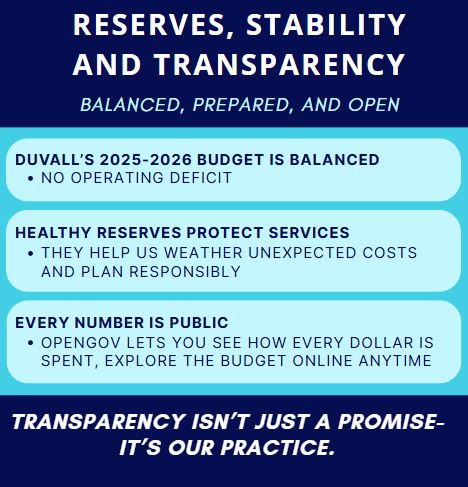
The truth is simple: Duvall’s 2025–2026 budget is balanced.

We maintain healthy reserves across our funds — including our General Fund — to make sure we can weather unexpected costs or economic shifts without cutting services.

This budget uses a portion of those reserves for planned projects and investments- exactly what they’re there for. Those reserves aren’t “extra” money sitting around — they’re a sign of fiscal responsibility. They stabilize our city, protect essential services, and keep us prepared for the future.

And you don’t have to take my word for it. Every budget detail is published for the public to see on OpenGov. Transparency is how we build trust and keep our community informed: https://stories.opengov.com/…/published/6MBzSG4wW…

Ballots will be mailed out this week!

No matter who you’re supporting, showing up matters. Local elections shape the community we all share, and your voice makes a difference.

Many of you I’ve spoken with have mentioned you’re brand new to Duvall — welcome! We’re so glad you’re here.

If you’ve recently moved, make sure your voter information is up to date so your ballot gets to you on time.

Below is some helpful information and if you have any questions don’t hesitate to reach out directly to King County Elections.

Register to vote! https://kingcounty.gov/…/how-to-vote/register-to-vote

Make sure your address is up-to-date if you just moved here! https://kingcounty.gov/…/register-to…/change-my-address

View your voter registration information, track your ballot and read about the contests on your ballot: https://info.kingcounty.gov/kcelect…/vote/myvoterinfo.aspx

Find out how to get your ballot if you need accessible voting options or if you’ll be out of town and more: https://kingcounty.gov/…/ballots/how-to-get-your-ballot

Where the Rest of the Money Lives

When you see numbers in the millions, it’s natural to wonder — is Duvall overspending?

Here’s what’s really happening:

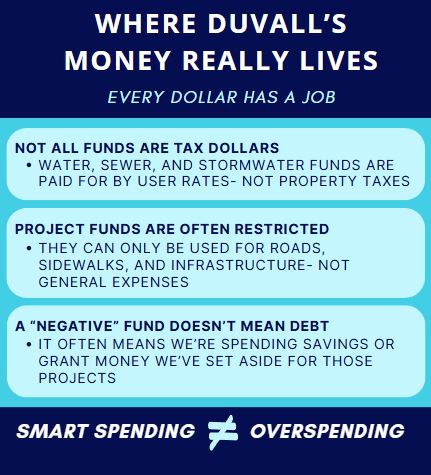
A lot of our budget lives in restricted funds — like water, sewer, and stormwater utilities. Those are self-sustaining and paid for by user rates, not property taxes.

Then there are Capital and Street Funds, which rely on grants, impact fees, and savings for specific projects — like rebuilding 3rd Avenue or improving Main Street crossings.

Sometimes you’ll see a “negative” balance listed for one of those funds. That doesn’t mean the City is in debt — it often means we’re using reserves that were saved for exactly that purpose (for example, spending grant matches or construction savings).

In short: our funds are doing their jobs — maintaining the systems we rely on and investing in future improvements.